Navigation



Could What’s on Your Plate Affect Your Brain Before Your Memory Shows Any Signs of Trouble?
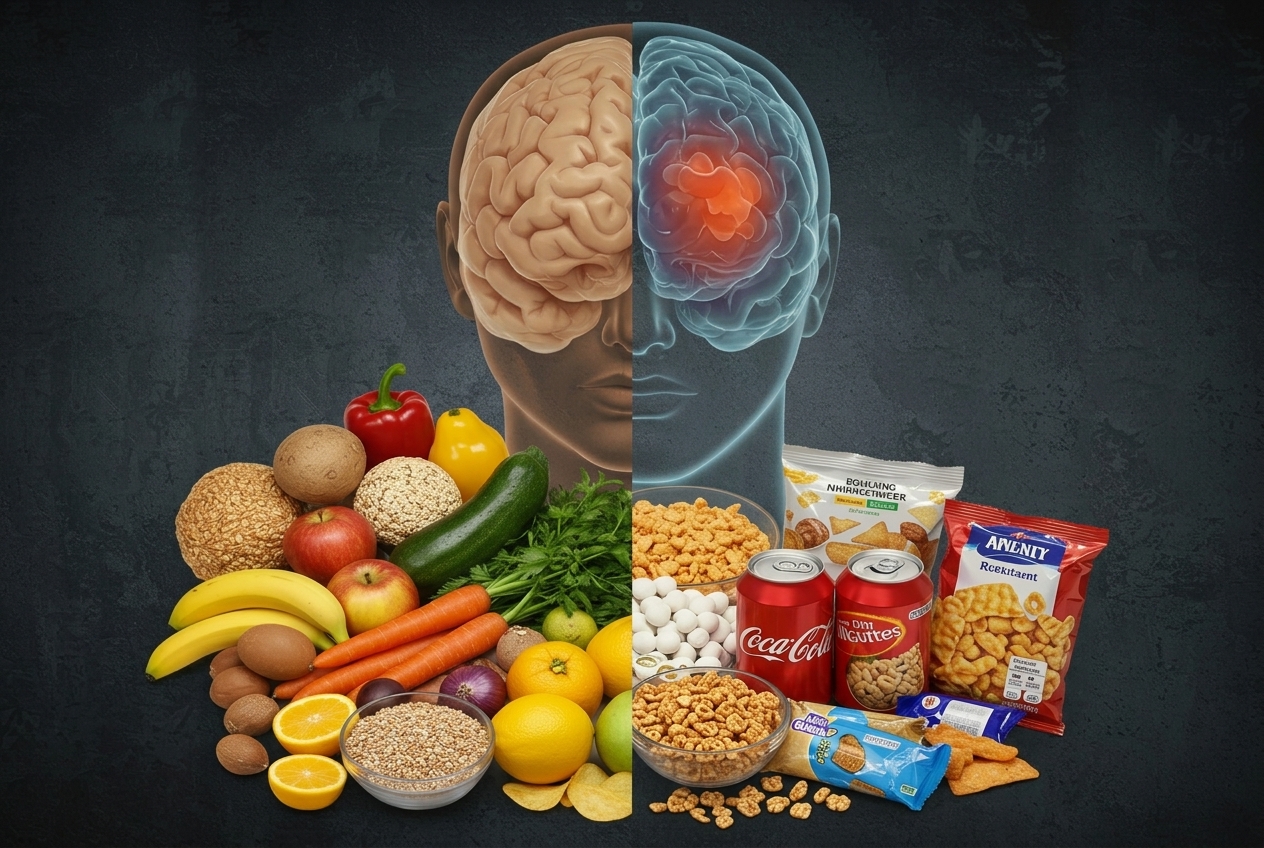

Research involving nearly 9,000 Canadian adults indicates that a higher intake of ultraprocessed foods correlates with increased body fat and signs of vascular brain injury, though cognitive performance remains unaffected. Caution is advised when interpreting these findings regarding brain health.

Study Overview and Participants
A recent cross-sectional analysis published in JAMA Network Open examined the relationship between ultraprocessed foods (UPFs) and various health indicators among Canadians aged 35 to 69 years. The study analyzed data from participants in the Canadian Alliance for Healthy Hearts and Healthy Minds (CAHHM) and the Prospective Urban and Rural Epidemiology-MIND (PURE-MIND) studies, encompassing 8,783 adults with an average age of 57.7 years and a mean body mass index (BMI) of 27.0. Approximately 56.6% of the participants were female.
Ultraprocessed Foods Consumption Patterns
Findings showed that ultraprocessed foods accounted for about 42% of the daily caloric intake of these adults. Participants in the lower quartile consumed a median of 3.1 servings of UPFs per 2,000 kcal, while those in the upper quartile consumed a median of 12.8 servings per 2,000 kcal. The study highlighted that higher UPF consumers often had less healthy dietary patterns, incorporating fewer minimally processed foods and experiencing poorer cardiometabolic profiles.
Impact on Body Fat and Vascular Health
The investigation revealed a significant association between increased UPF consumption and higher levels of overall and visceral adiposity. In the fully adjusted models, those in the highest quartile of UPF intake demonstrated a body fat percentage that was 1.7 percentage points greater than those in the lowest quartile. Additionally, their visceral adipose tissue volume was 5.7 mL higher. Each additional 5 servings of UPFs per 2,000 kcal was linked to a 0.9 percentage-point increase in body fat and a 4.0 mL increase in visceral adiposity.
The investigation revealed a significant association between increased UPF consumption and higher levels of overall and visceral adiposity.
Moreover, the odds of experiencing vascular brain injury (VBI) were 40% higher for participants consuming the highest levels of UPFs when compared to the lowest quartile. The prevalence of VBI was 8.1% in the lower UPF group and 11.3% in the higher UPF group. However, sensitivity analyses indicated that when adjusting the definition of UPF intake, these associations with VBI were less robust.
No Association Found with Cognitive Performance
Despite significant associations between body fat and vascular health, higher UPF intake did not correlate with poorer cognitive function, as measured by standardized assessments such as the Montreal Cognitive Assessment (MOCA) and the Digital Symbol Substitution Test (DSST). Cognitive scores remained consistent across quartiles of UPF consumption, suggesting that the studied population may have a generally high cognitive reserve. Some secondary analyses suggested lower odds of cognitive decline with increased UPF intake, though these findings should be interpreted with caution, as they may reflect confounding.
THE CNP TAKEAWAY
Higher consumption of ultraprocessed foods is associated with increased body fat and vascular brain health changes in middle-aged adults, but it does not appear to directly affect cognitive performance. Future research should aim to explore the long-term effects of UPFs on brain health.
Sources & References
Original News Source
News Medical. Could ultraprocessed foods affect your brain before you notice?
Additional Research & CNP References
-
Sucharska M, Gardas K, Hernik K, et al. (2026). Diet, Microbiota and Memory: How What We Eat Affects Memory and Cognitive Processes and Whether Diet Can Help Prevent the Onset of Dementia. Cureus 18(8): e115384. doi:10.7759/cureus.115384
-
Buis, C., Nicolaou, M., Visser, M., Olthof, M. R., & Wijnhoven, H. A. H. (2026). Ultra-processed food intake and cognitive decline in older adults. European journal of nutrition, 65(2), 66. https://doi.org/10.1007/s00394-026-03896-x