 Navigation



Study Reveals Role of Highly Processed Foods in Binge Eating Episodes


A recent study published in the International Journal of Eating Disorders highlights that binge-eating episodes predominantly involve highly processed foods. This finding underscores the need for improved reporting on the types of foods consumed during these episodes.

Understanding Binge Eating Behavior
Binge eating is characterized by the consumption of a large quantity of food in a short duration, often accompanied by feelings of a lack of control. This pattern may lead to rapid eating, continuing despite fullness, or eating without physical hunger. Individuals may commonly experience discomfort or guilt afterward. Although occasional binge eating does not equate to a disorder, recurrent episodes, which occur at least once a week for three months, may indicate binge-eating disorder (American Psychiatric Association, 2013; Di Giacomo et al., 2022). This disorder is often associated with other mental health issues, including mood and anxiety disorders (Kowalewska et al., 2024).
Key Findings of the Study
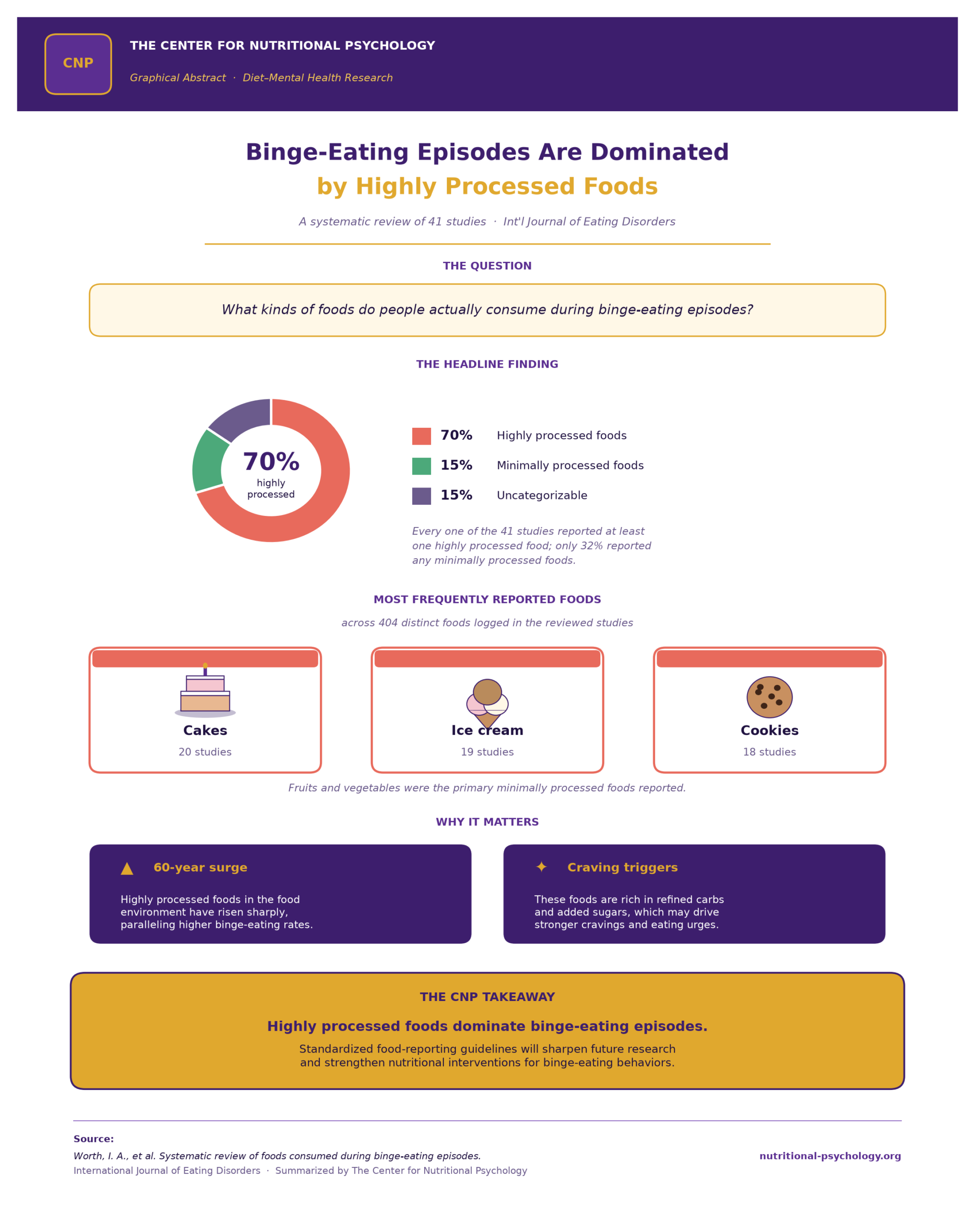
In a comprehensive analysis led by Ingrid A. Worth and colleagues, researchers examined 41 studies that documented the types of foods consumed during binge-eating episodes. The analysis revealed that every study included at least one example of highly processed food, whereas only 32% reported the intake of minimally processed foods. Specifically, 70% of the identified food types were categorized as highly processed, 15% as minimally processed, and 15% as uncategorizable. This stark contrast points to the predominance of highly processed foods in binge-eating situations.
Implications of Processed Food Consumption
Across all analyzed studies, 404 distinct foods were reported during binge-eating episodes. Notably, the most frequently cited highly processed items included cakes (20 studies), ice cream (19), and cookies (18). On the other hand, fruits and vegetables were the primary minimally processed foods mentioned. The researchers noted that the prevalence of highly processed foods in people’s environments has increased significantly over the last 60 years, paralleling a rise in binge eating incidents. These foods are often rich in refined carbohydrates and added sugars, which may trigger stronger cravings and eating urges.
Considerations for Future Research
Despite the critical insights provided, the study authors acknowledged methodological limitations. Many studies did not specify how many participants consumed particular food items, complicating interpretations of the overall trends. To enhance the accuracy of future research, the authors suggest establishing more standardized guidelines for food reporting. This improvement could facilitate a better understanding of how the evolving food landscape affects binge-eating behaviors.
THE CNP TAKEAWAY
Understanding the predominant role of highly processed foods in binge eating can guide future nutritional interventions. Enhanced reporting standards in research will strengthen insights into this complex relationship.
Images courtesy of Shutterstock.
Prepared by CNP from the August 2026 article “What do people eat when they binge eat?” by Vladimir Hedrih, PhD. Originally published through The Center for Nutritional Psychology, or read the study’s summary in the NPRL.
Sources & References
Original News Source
The Center for Nutritional Psychology. Highly Processed Foods in Binge Eating Episodes: The Importance of Improving Food Reporting


