Navigation



Higher ultra-processed food intake is associated with slightly higher dementia risk
 Watch on YouTube
- A study of middle-aged and older Australians published in Diagnosis, Assessment & Disease Monitoring examined the links between ultra processed food and dementia, effects on cognitive function and gut-health.
- Higher ultra-processed food intake was associated with slightly lower attention scores and somewhat higher dementia risk.
A 10% increase in ultra-processed food intake (roughly corresponding to a 150-gram bag of potato chips per day) was associated with 0.05 lower standardized-score points on an attention test. - The reported associations were independent of adherence to the Mediterranean diet.
We all know that some foods are healthy while others are less so or not at all. Foods like vegetables, fruits, fish, minimally processed lean meats, whole grains, and yogurt are generally considered healthy because they provide nutrients the body needs, such as healthy fats, carbohydrates, proteins, vitamins, and fiber. On the other hand, foods that contain lots of refined starches, unhealthy fats, and industrial additives are generally considered less healthy. The NOVA classification system, a widely used food classification framework in nutrition research, classifies many such foods as ultra-processed foods (Monteiro et al., 2018).
The NOVA classification system
The NOVA classification system groups foods according to the nature, extent, and purpose of the processing they undergo. In this system, processing involves all physical, biological, and chemical processes used after foods are separated from nature, and before being consumed or prepared as dishes and meals (Monteiro et al., 2018).
UPFs now constitute over half of total dietary energy intake in high-income countries such as the United States and the United Kingdom.
It divides foods into four main groups: unprocessed or minimally processed foods, processed culinary ingredients, processed foods, and ultra-processed foods (UPFs). For example, unprocessed or minimally processed foods are foods that are eaten in their natural state or changed only by basic processes such as drying, crushing, boiling, freezing, or through non-alcoholic fermentation. On the other hand, processed foods are foods created by adding culinary ingredients such as oil, sugar, or salt to unprocessed or minimally processed foods (Monteiro et al., 2018; Petrus et al., 2021) (see Figure 1).
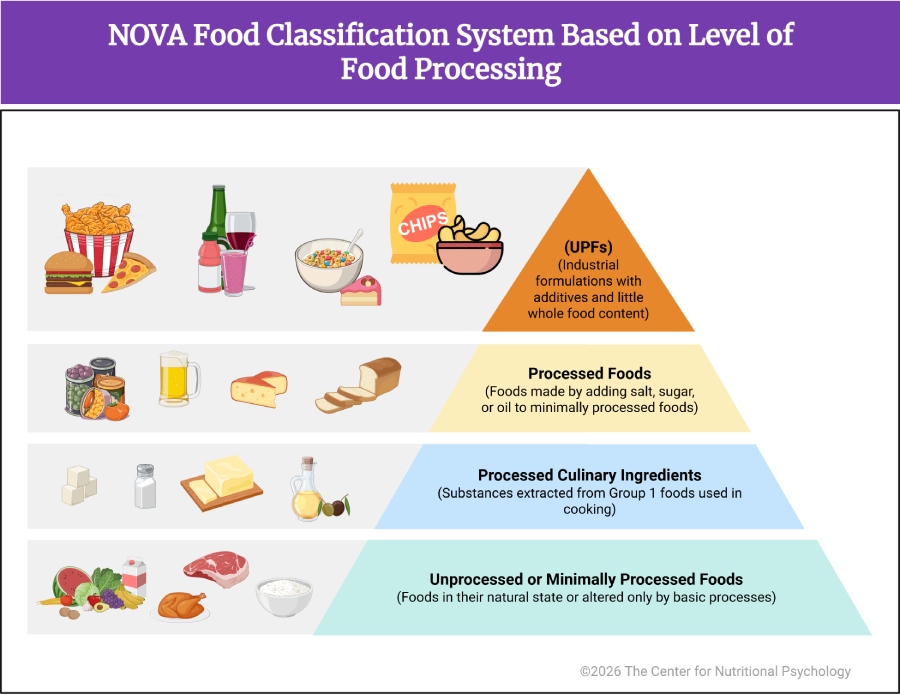
Figure 1. NOVA Classification System Based on Level of Food Processing
What is ultra-processed food?
Foods with the highest level of processing in the NOVA classification system are ultra-processed foods. Ultra-processed foods are industrially made foods and drinks that are produced from refined ingredients, extracted substances, and additives rather than whole foods. They contain ingredients not commonly used in home cooking, such as emulsifiers, flavor enhancers, colorants, sweeteners, stabilizers, and preservatives.
Examples include many soft drinks, packaged snacks, instant noodles, reconstituted meat products, sweetened breakfast cereals, ready-to-eat meals, and many packaged desserts. In general, these foods are primarily designed to be convenient, tasty, cheap, and long-lasting (Hedrih, 2023; Monteiro et al., 2018).
An important group of researchers even argues that ultra-processed foods should be classified as addictive substances.
The consumption of ultra-processed foods rose drastically in the last several decades, coinciding with an increase in the prevalence of chronic conditions such as type 2 diabetes and obesity (Baker et al., 2020; Juul et al., 2022; Juul & Hemmingsson, 2015; Magliano et al., 2019; Wong et al., 2022).
“UPFs [ultra-processed foods] now constitute over half of total dietary energy intake in high-income countries such as the United States and the United Kingdom, and approximately 42% in Australia. Similar trends are also emerging across low- and middle-income nations”, Barbara R. Cardoso and her colleagues, authors of this study, explain (Cardoso et al., 2026).
Because of this, ultra-processed foods attract considerable research attention. Many studies found their consumption to be associated with various adverse health conditions, including cardiovascular diseases, type 2 diabetes, obesity, sleep problems, and mental disorders (Cardoso et al., 2026; Duquenne et al., 2024; Hedrih, 2024, 2025). An important group of researchers even argues that ultra-processed foods should be classified as addictive substances (Gearhardt et al., 2023; Hedrih, 2023).
The consumption of ultra-processed foods has risen sharply over the last several decades, coinciding with an increase in the prevalence of chronic conditions.
What Did the Study Examine?
Study author Barbara R. Cardoso and her colleagues examined the association between ultra-processed food intake and cognitive function, as well as dementia risk, in Australian adults aged 40 to 70 years enrolled in the Healthy Brain Project (Cardoso et al., 2026). Study participants were 2192 Australians. They completed a food frequency questionnaire, allowing researchers to assess their diet, and a cognitive function assessment. Study authors estimated participants’ dementia risk using two cardiovascular risk factors, aging indicators, and dementia risk scores (CAIDE) for a subgroup for which these scores were available. Study authors also used modified dementia risk scores, modified in a way that isolates the modifiable aspects of dementia risk, aspects that can plausibly be influenced by diet.
Key Findings
Results showed that for every 10% increase in ultra-processed food consumption, there was a slight decrease in attention scores (0.05 standardized-score points). 10% of ultra-processed food intake amounts to around 150 grams per day, which is roughly half a can of Coke or a bag of potato chips. Similarly, higher intake of ultra-processed foods was associated with increased dementia risk, but only when the modified dementia risk scores were used as indicators of this risk. This association was independent of adherence to the Mediterranean diet (a healthy dietary pattern often examined in research).
Results showed that for every 10% (half a can of Coke or a bag of chips) increase in ultra-processed food consumption, there was a slight decrease in attention scores
However, non-modified dementia risk scores were no longer associated with ultra-processed food intake after controlling for adherence to the Mediterranean diet (see Figure 2).
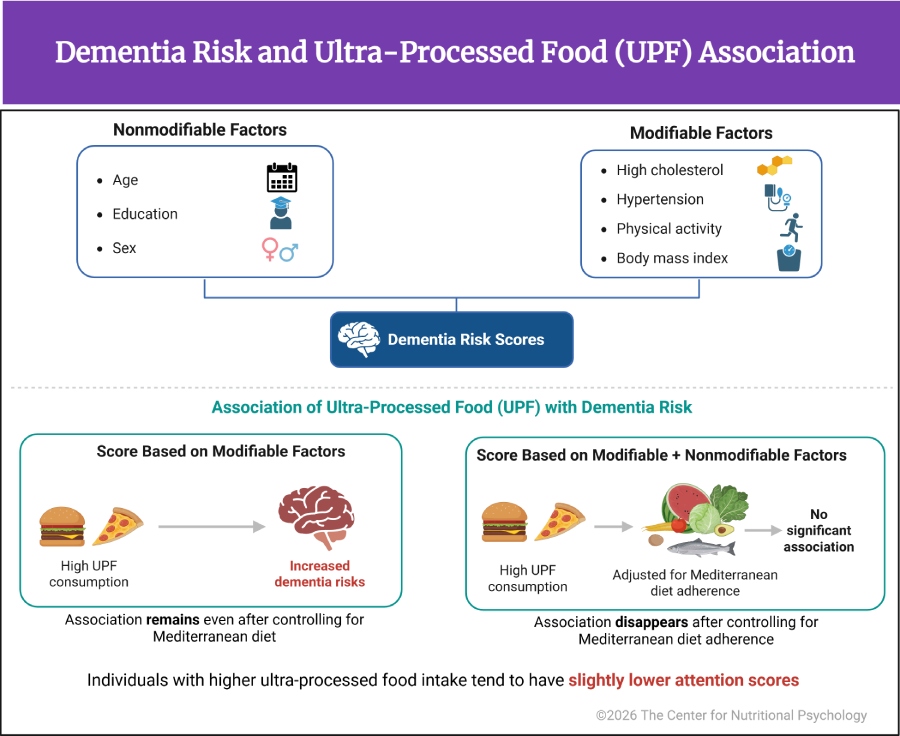
Figure 2. Dementia Risk and Ultra-Processed Food (UPF) Association
Why it matters?
The study adds to the large body of research linking ultra-processed food intake to different adverse health conditions. The findings suggest that ultra-processed food intake might also be relevant for the cognitive health of middle-aged and older adults who do not yet have dementia. The fact that dementia risk remained associated with ultra-processed food intake even after controlling for adherence to the Mediterranean diet suggests that specific ingredients in ultra-processed foods, or perhaps processing itself, may matter beyond overall diet quality.
Limitations to Consider
This study is cross-sectional. This means that no causal inferences can be derived from the results. It remains unknown why exactly ultra-processed food intake is associated with attention scores and dementia. The association with attention scores is very weak. Study authors also report that participants of this study are unique, as the majority of them reported a first- or second-degree family history of dementia, suggesting they are at higher risk of cognitive decline while remaining free of cognitive impairment or dementia. Finally, the study did not examine the actual incidence of dementia but only dementia risk estimates.
The Bottom Line
The study indicates that individuals with higher ultra-processed food intake tend to have slightly lower attention scores and higher dementia-risk scores. However, because the study is cross-sectional, these findings remain about associations and not evidence that ultra-processed food causes poorer attention or increased dementia risk.
The paper “Ultra-processed food intake, cognitive function, and dementia risk: A cross-sectional study of middle-aged and older Australian adults” was authored by Barbara R. Cardoso, Euridice Martinez Steele, Barbara Brayner, Xinyi Yuan, Lisa Bransby, Hannah Cummins, Yen Ying Lim, and Priscila Machado.
Frequently Asked Questions
Ultra-processed foods are typically made from refined ingredients, industrial additives, preservatives, artificial flavors, sweeteners, unhealthy fats, and added sugars. These foods often contain little whole food content and are designed for convenience and long shelf life. Common examples include packaged snacks, sugary drinks, fast food, instant meals, and processed desserts linked to poorer overall health outcomes.
In this study, higher ultra-processed food intake was associated with a slightly higher risk of dementia and less favorable scores on modifiable dementia risk factors. Researchers found that diets high in ultra-processed foods may negatively influence brain health through pathways involving inflammation, cardiovascular health, and metabolic dysfunction, which are all connected to cognitive decline and long-term mental wellbeing.
No, this study did not prove that ultra-processed foods directly cause dementia. The research identified an association between higher ultra-processed food intake and increased dementia risk, but association does not confirm causation. Additional long-term clinical studies are needed to better understand whether ultra-processed foods directly contribute to dementia development and cognitive decline over time.
The NOVA food classification system is commonly used to identify ultra-processed foods. This system categorizes foods based on the extent and purpose of industrial processing. Ultra-processed foods in the NOVA system often contain additives, refined substances, preservatives, and artificial ingredients designed to improve flavor, texture, convenience, and shelf life rather than nutritional quality.
This finding is important because it suggests that ultra-processed food intake may negatively affect dementia risk beyond overall adherence to a Mediterranean diet. Even individuals following healthier dietary patterns could still experience harmful effects from high ultra-processed food consumption. The results highlight the importance of not only eating healthy foods but also limiting highly processed products for better brain health.
References
Baker, P., Machado, P., Santos, T., Sievert, K., Backholer, K., Hadjikakou, M., Russell, C., Huse, O., Bell, C., Scrinis, G., Worsley, A., Friel, S., & Lawrence, M. (2020). Ultra-processed foods and the nutrition transition: Global, regional and national trends, food systems transformations and political economy drivers. Obesity Reviews, 21(12), e13126. https://doi.org/10.1111/obr.13126
Cardoso, B. R., Steele, E. M., Brayner, B., Yuan, X., Bransby, L., Cummins, H., Lim, Y. Y., & Machado, P. (2026). Ultra-processed food intake, cognitive function, and dementia risk: A cross-sectional study of middle-aged and older Australian adults. Alzheimer’s & Dementia: Diagnosis, Assessment & Disease Monitoring, 18(2), e70335. https://doi.org/10.1002/dad2.70335
Duquenne, P., Capperella, J., Fezeu, L. K., Srour, B., Benasi, G., Hercberg, S., Touvier, M., Andreeva, V. A., & St-Onge, M.-P. (2024). The association between ultra-processed food consumption and chronic insomnia in the NutriNet-Santé Study. Journal of the Academy of Nutrition and Dietetics, S2212267224000947. https://doi.org/10.1016/j.jand.2024.02.015
Gearhardt, A. N., Bueno, N. B., DiFeliceantonio, A. G., Roberto, C. A., Jiménez-Murcia, S., & Fernandez-Aranda, F. (2023). Social, clinical, and policy implications of ultra-processed food addiction. BMJ, e075354. https://doi.org/10.1136/bmj-2023-075354
Hedrih, V. (2023). Scientists Propose that Ultra-Processed Foods be Classified as Addictive Substances. CNP Articles in Nutritional Psychology. https://www.nutritional-psychology.org/scientists-propose-that-ultra-processed-foods-be-classified-as-addictive-substances/
Hedrih, V. (2024). What are Ultra-Processed Foods Doing to Your Mental and Physical Health? CNP Articles in Nutritional Psychology. https://www.nutritional-psychology.org/what-are-ultra-processed-foods-doing-to-your-mental-and-physical-health/
Hedrih, V. (2025, July 19). People Consuming Lots of Ultra-Processed Foods Tend to Have Slightly Worse Mental Health Indicators. CNP Articles in Nutritional Psychology. https://www.nutritional-psychology.org/ultra-processed-food-effects-mental-health/
Juul, F., & Hemmingsson, E. (2015). Trends in consumption of ultra-processed foods and obesity in Sweden between 1960 and 2010. Public Health Nutrition, 18(17), 3096–3107. https://doi.org/10.1017/S1368980015000506
Juul, F., Parekh, N., Martinez-Steele, E., Monteiro, C. A., & Chang, V. W. (2022). Ultra-processed food consumption among US adults from 2001 to 2018. The American Journal of Clinical Nutrition, 115(1), 211–221. https://doi.org/10.1093/ajcn/nqab305
Magliano, D. J., Islam, R. M., Barr, E. L. M., Gregg, E. W., Pavkov, M. E., Harding, J. L., Tabesh, M., Koye, D. N., & Shaw, J. E. (2019). Trends in incidence of total or type 2 diabetes: Systematic review. BMJ, 366, l5003. https://doi.org/10.1136/bmj.l5003
Monteiro, C. A., Cannon, G., Moubarac, J. C., Levy, R. B., Louzada, M. L. C., & Jaime, P. C. (2018). The un Decade of Nutrition, the NOVA food classification and the trouble with ultra-processing. Public Health Nutrition, 21(1), Article 1. https://doi.org/10.1017/S1368980017000234
Petrus, R. R., do Amaral Sobral, P. J., Tadini, C. C., & Gonçalves, C. B. (2021). The NOVA classification system: A critical perspective in food science. Trends in Food Science & Technology, 116, 603–608. https://doi.org/10.1016/j.tifs.2021.08.010
Wong, M. C., Mccarthy, C., Fearnbach, N., Yang, S., Shepherd, J., & Heymsfield, S. B. (2022). Emergence of the obesity epidemic: 6-decade visualization with humanoid avatars. The American Journal of Clinical Nutrition, 115(4), 1189–1193. https://doi.org/10.1093/AJCN/NQAC005
Last updated: