Ultra-Processed Food Consumption and Mental Health: A Systematic Review and Meta-Analysis of Observational Studies
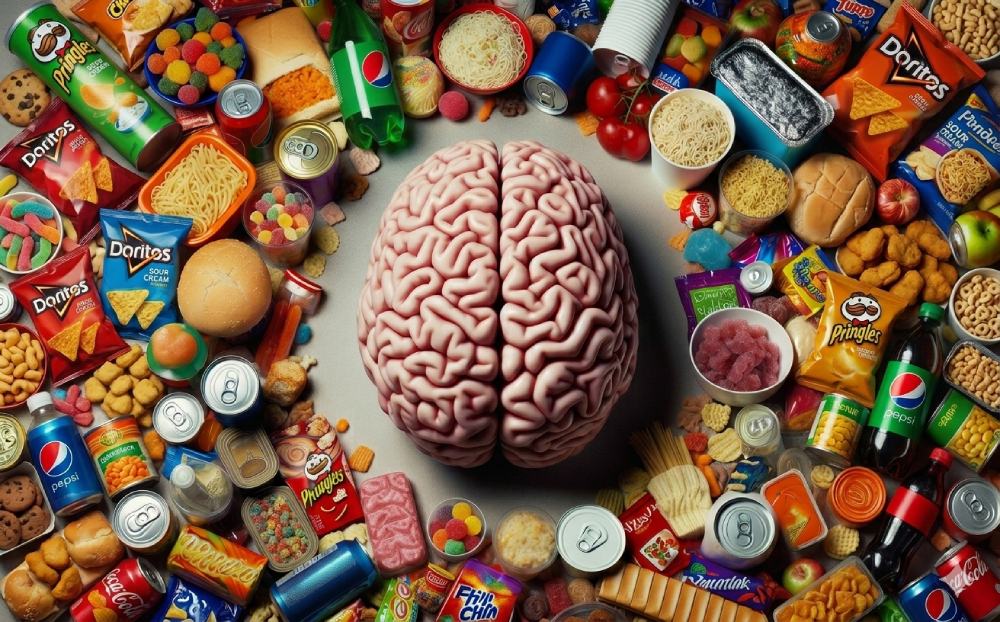
This meta-analysis expands on previous reviews by synthesizing contemporary studies on the link between ultra-processed food (UPF) consumption and mental health disorders. It included 17 observational studies (n = 385,541), 15 cross-sectional and 2 prospective. The analysis found that higher UPF consumption was associated with increased odds of depressive and anxiety symptoms. Specifically, there was a 53% higher odds of common mental disorder symptoms, with separate odds ratios of 1.44 for depressive symptoms and 1.48 for anxiety symptoms. Additionally, the prospective studies showed that greater UPF intake was linked to a 22% higher risk of developing depression later. While these findings suggest an association between UPF consumption and mental health issues, further well-designed studies are needed to explore causal relationships.
Year: 2022
Reference: Lane, M. M., Gamage, E., Travica, N., Dissanayaka, T., Ashtree, D. N., Gauci, S., Lotfaliany, M., O'Neil, A., Jacka, F. N., & Marx, W. (2022). Ultra-Processed Food Consumption and Mental Health: A Systematic Review and Meta-Analysis of Observational Studies. Nutrients, 14(13), 2568. https://doi.org/10.3390/nu14132568
Related Studies
Relationship between FODMAPs intake and mental health among Iranian adults Although limited and inconsistent, research on the link between FODMAPs (fermentable oligosaccharides, disaccharides, monosaccharides, and polyols) and psychological conditions like depression, anxiety, and stress is gaining interest. This study by Motallaei et al. (2025) examined the relationship between FODMAPs intake and mental health among Iranian […]
The Western diet (WD), characterized by high intake of saturated fats and refined carbohydrates, is strongly linked to obesity, cognitive impairment, and emotional disorders in both humans and animal models. This diet disrupts gut microbiota composition, affecting brain function through gut–brain axis mechanisms. Additionally, prolonged exposure to highly palatable WD foods may promote addictive-like eating […]
 Navigation