Navigation


Relationship between 39 dietary markers of ultra-processed food and incident depression: evidence from the prospective UK Biobank cohort study
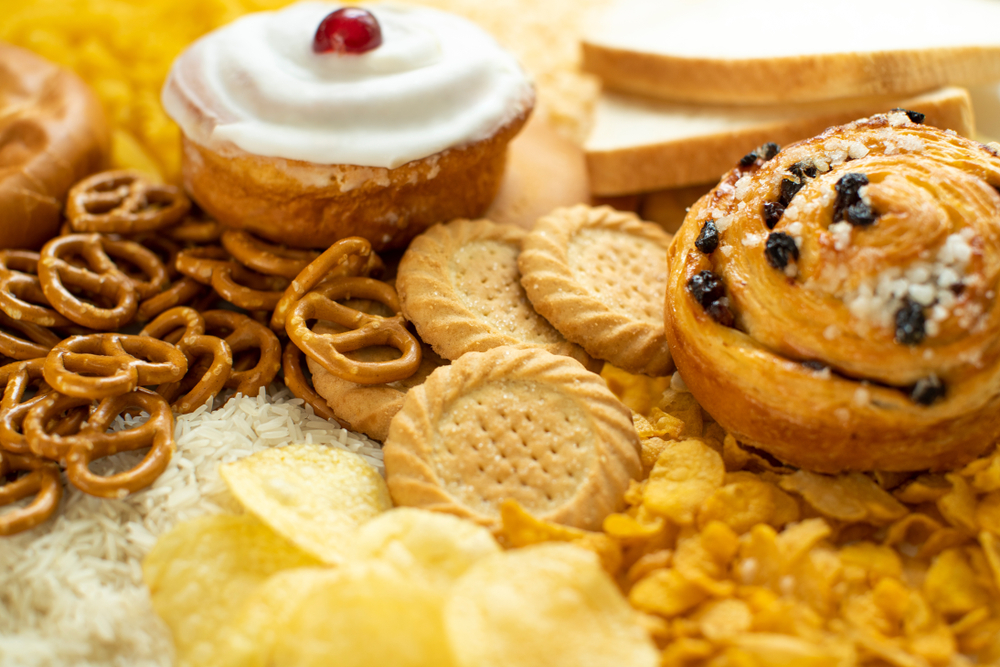
Understanding dietary influences on mental health is crucial. A recent study aimed to assess whether the consumption of markers of ultra-processed foods (MUPs) correlates with the emergence of depression. This investigation involved a substantial cohort of 171,818 participants, each of whom completed at least one Oxford WebQ. Researchers employed Cox proportional hazards regression models to evaluate incident depression, focusing on 10 categories of MUPs and 39 specific items, measured as a percentage of total food intake (%TFI) using penalized cubic splines.
During an average follow-up of 10.7 years, the study identified 5,424 new cases of depression. The data indicated a significant, dose-dependent relationship between certain MUPs and the risk of depression. Specifically, the categories of flavour, colouring agent, and sweetener demonstrated positive correlations, with the following hazard ratios (HRs) and their respective 95% confidence intervals (CIs) noted: flavour (40% compared to 5% TFI; HR 1.46, CI 1.29–1.64), colouring agent (20% compared to 3% TFI; HR 1.49, CI 1.30–1.70), and sweetener (20% compared to 0% TFI; HR 1.45, CI 1.32–1.58). In contrast, two categories—protein source and fibre—exhibited significant U-shaped associations, while five categories, including flavour enhancer and modified oil, showed no significant relationship.
The robustness of these findings was confirmed through various sensitivity analyses, emphasizing that only certain MUPs are implicated in the risk of developing depression. These insights provide a foundational framework for identifying key MUPs for future interventions aimed at reducing ultra-processed food intake and inform subsequent mechanistic studies. [NPID: Markers, Ultra-processed foods, MUPs, depression, flavor, color, sweetener]
Year: 2026