 Navigation



Dietary fruits and vegetables mitigate cognitive impairment in mice with high-fat diet-induced obesity: A pilot study
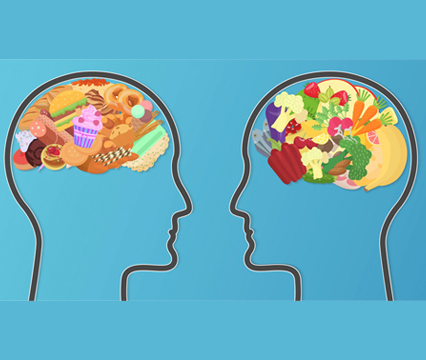
The increasing incidence of cognitive decline associated with obesity poses a notable public health challenge. Epidemiological evidence suggests a correlation between higher fruit and vegetable (F&V) consumption and reduced risk of cognitive impairment; however, causation remains unproven. This study aimed to explore whether F&V supplementation could mitigate cognitive decline in mice subjected to a high-fat diet.
Methods involved the random assignment of 6-week-old male C57BL/6J mice into five dietary groups: a low-fat (LF, 10% kcal fat) diet and a high-fat (HF) diet with varying levels of F&V supplementation (0%, 5%, 10%, or 15%). These supplementation levels correspond to approximately 0, 3, 5-7, or 8-9 servings of F&V per day for humans. After 17 weeks on their respective diets, cognitive function was assessed using the novel object recognition test.
Results indicated that mice on the high-fat diet exhibited significant cognitive impairment, as evidenced by decreased exploration of novel objects compared to those on the low-fat diet. Conversely, F&V supplementation demonstrated a dose-dependent amelioration of cognitive deficits induced by the high-fat diet.
In conclusion, this pilot study provides preliminary evidence supporting a causal relationship between F&V intake and the prevention of cognition impairment associated with high-fat diets, warranting further investigation into the protective mechanisms of F&V against obesity-related cognitive decline. [NPID: Fruits and vegetables, cognitive decline, obesity, cognitive impairment, high fat]
Year: 2025