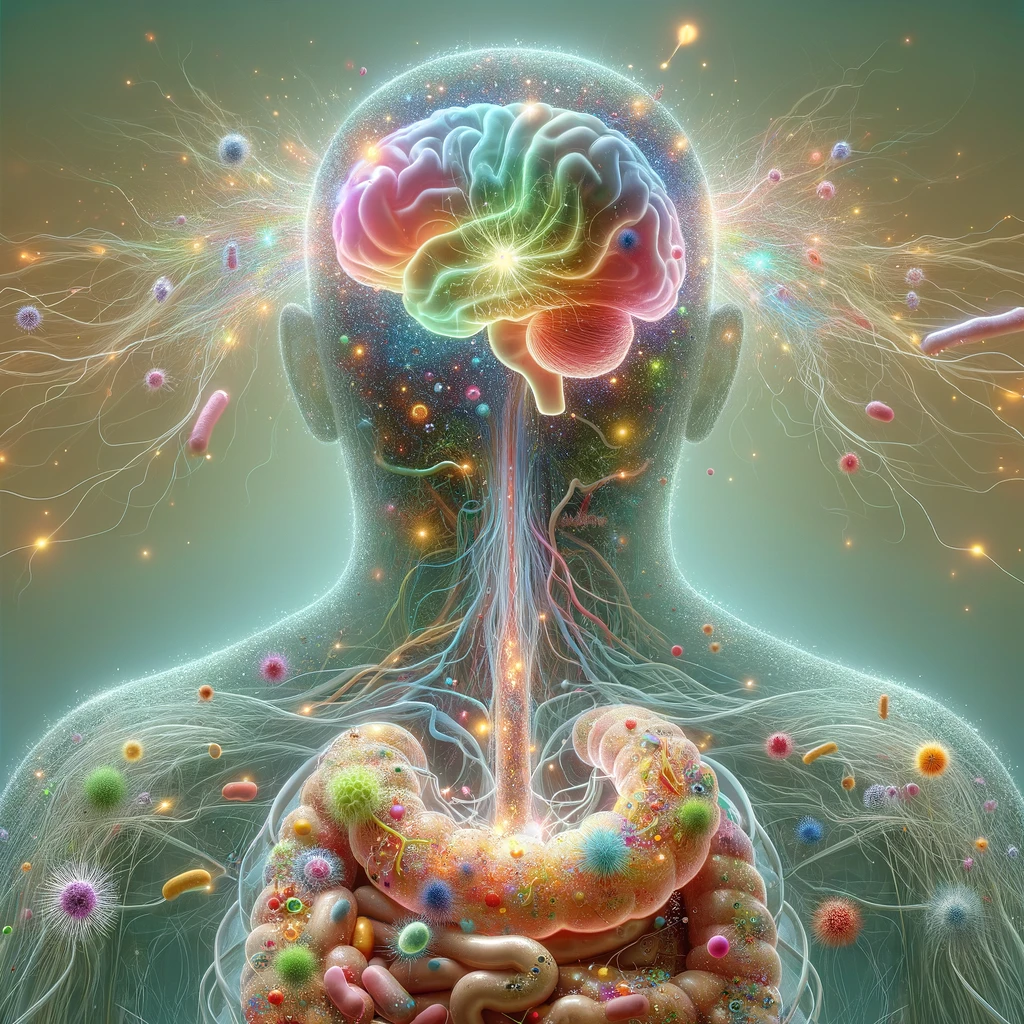
From gut dysbiosis to altered brain function and mental illness: Mechanisms and pathways
This 2016 review examined the influence gut microbiomes have on brain development and neurological function, and the mechanism in which this can lead to mental illnesses. Evidence has emerged that the gut microbiome can have an impact on neural development, cognition and behaviour through gut-brain axis (the bidirectional communication system between the central nervous system and the gastrointestinal tract), and also that gut microbiota composition can be altered by behavior changes, while diversifying the microbiome can induce depressive-like behaviours. Rogers et al. (2016) go on to discuss how the increasing number of studies in this area of research can form a platform on which novel effective therapies can be designed. [NPID: microbiome, MGBA, gut-brain axis, gut microbiome, neurological function, brain development, GI tract]
Year: 2016
Reference: Rogers, G. B., Keating, D. J., Young, R. L., Wong, M. L., Licinio, J., & Wesselingh, S. (2016). From gut dysbiosis to altered brain function and mental illness: mechanisms and pathways. Molecular psychiatry, 21(6), 738–748. https://doi.org/10.1038/mp.2016.50
Related Studies
Inflammatory bowel diseases (IBDs), debilitating illnesses of the gastrointestinal system with few effective therapies, may benefit from nutritional intervention as a cost-effective and efficient means of treating symptoms. Glucoraphanin (GLR), one of the highly concentrated glucosinolate chemicals, may be converted by certain mammalian gut bacteria into the anti-inflammatory isothiocyanate sulforaphane. It is uncertain if colitis […]
Whole food supplementation techniques have been used to address mental health throughout the last 20 years. Furthermore, the capacity of gut bacteria, also known as psychobiotics, to influence behavior favorably through the microbiota-gut-brain axis has drawn increased attention. Foods that have undergone fermentation provide a comprehensive whole-food microbiota-modifying intervention. Fermented foods (FF) were found to […]
 Navigation