 Navigation


Build toward the Nutritional Psychology Micro-Degree
Start with available certificates now and continue through the full pathway as each stage becomes available.
Micro-Degree pathway status
The Micro-Degree pathway is open now.
Learners do not need to wait for the full credential to be complete. Certificate 1 and Certificate 2 are available now and count toward the Nutritional Psychology Micro-Degree pathway. Certificate 3 is rolling out through 2026.
Begin with Certificate 1
Start with the theoretical foundations and core language used across CNP education.
Available nowContinue with Certificate 2
Move into biological mechanisms and the diet-mental health relationship.
Available nowPrepare for Certificate 3
Clinical application courses are rolling out and learners can join the waitlist for updates.
Rolling out / waitlistEarn the Micro-Degree
Complete all three certificates as they become available to work toward the full pathway.
Credential pathwayMicro-Degree in Nutritional Psychology
The courses available now are the Micro-Degree. Do not wait, start today. The NP-F and NP-M certificates open right now are the first two of the three that make up the Micro-Degree, and they count fully toward it. Begin with Certificate 1 and work through the path, which takes about a year to complete. The final NP-A courses are still rolling out through 2026, and the waitlist will notify you the moment the complete credential is live.
The CNP Micro-Degree in Nutritional Psychology (NP-FMA) is a focused, Continuing Education credential designed to support you in broadening your expertise to include education, assessment, and intervention in clinical and professional practice…
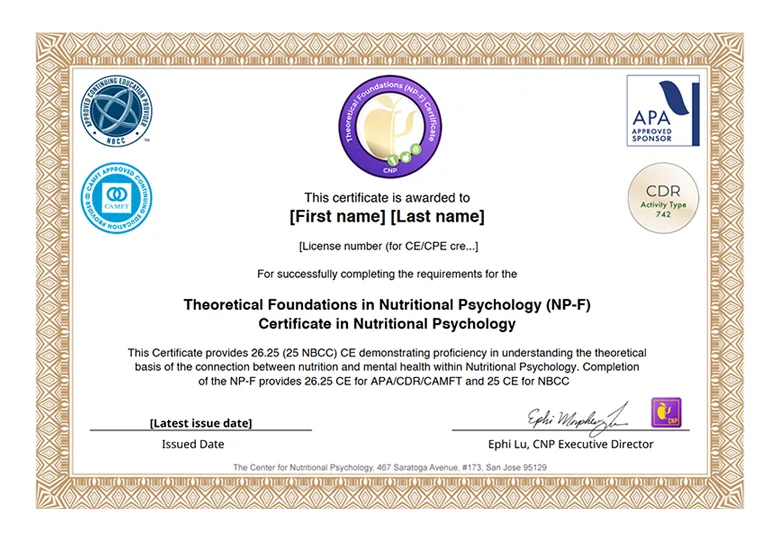
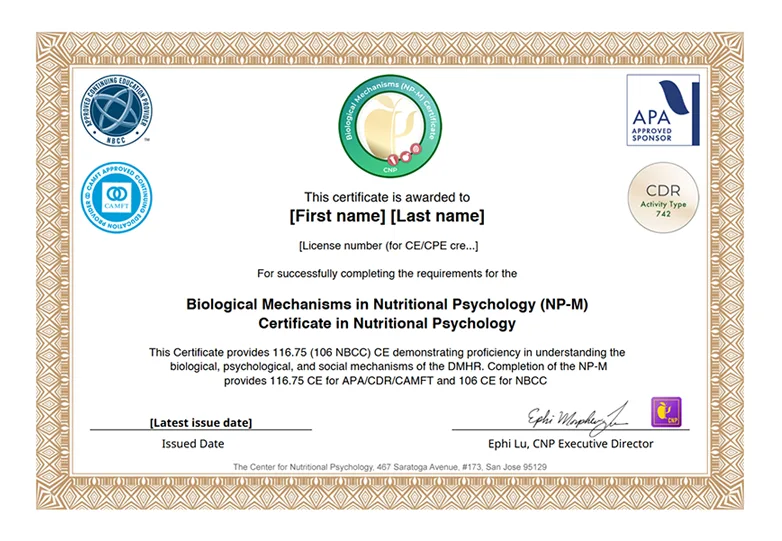
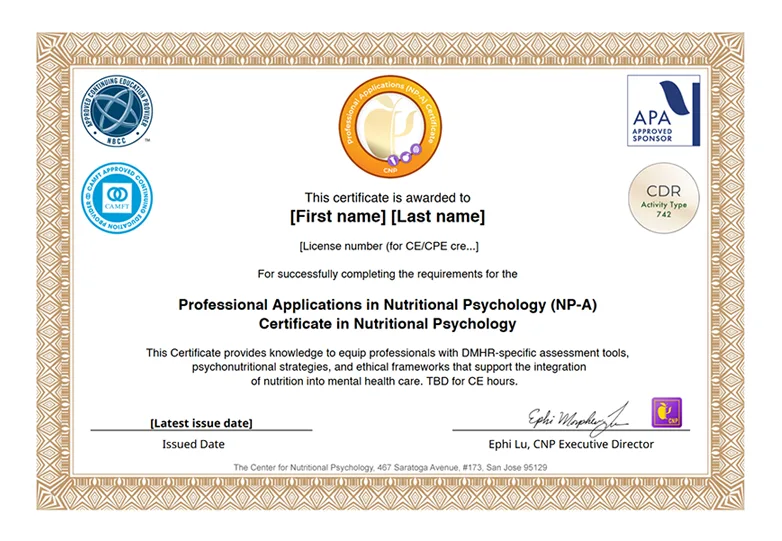
Requirements: The NP-FMA Micro-Degree in Nutritional Psychology requires the completion of 11 courses, grouped into three thematic areas: Certificate 1: Theoretical Foundations (NP-F), Certificate 2: Biological Mechanisms (NP-M), Certificate 3: Clinical/Professional Applications (NP-A). While Certificate #3 courses will become available in the spring, summer, and winter of 2026, learners can prepare now by completing the NP-F and NP-M certificates.
For professionals who have just completed the NP 100 Series Certificate (or are in the middle of completing it): As CNP transitions its CE program into a Certificate and Micro-Degree format, any courses completed in the NP 100 Series Certificate transfer to meet requirements for earning any of the Certificate or Micro-Degree in our new program structure. All CE previously completed remains fully valid, recognized, and applicable toward any CNP certificate or the new Micro-Degree.
Learners who earned the NP 100 Certificate have already fulfilled Certificate #2 in the new framework, and NP 100 also counts partially toward Certificate #1. Detailed instructions will be provided on how your existing coursework is transferred and how to proceed in the new program. If you’re unsure of your standing, contact our Program Administrator at admin@nutritional-psychology.org.
Why Complete Our Nutritional Psychology Micro-Degree (NP-FMA)?
Our micro-degree in nutritional psychology equips you with strong, evidence-based knowledge of the theoretical and biological connections between nutrition and mental health. It also enables you to integrate interdisciplinary nutrition and psychological science into your practice or classroom while remaining within your specific professional scope of practice. Additionally, this micro-degree can enhance your professional credibility, support your continuing education goals, and allow you to expand your range of services offered to your clients, patients, and students.
Ready to start the Micro-Degree pathway?
Begin with Certificate 1 now. Join the waitlist only if you want updates for Certificate 3 and the final Micro-Degree credential.
From CNP Articles

A study published in Nutrients explored how often mental health professionals address nutrition as well as how often nutrition professionals address mental health in their professional work -Across the full professional groups, the results showed that a vast majority of nutrition and mental health

- A study published in theInternational Journal of Eating Disorders explored what people eat during binge eating episodes - Searching published studies, they found that 100% of them report at least one highly processed food in binge-eating episodes, while only 32% reported minimally processed food

How Physical Health Can Affect Eating Behavior? We are all aware that our eating behaviors in mental health care can be heavily affected by our health. When we are ill, we often lose our appetite, sometimes completely. Some health issues are coupled with problems in the functioning of our digestive system, further decreasing our motivation […]
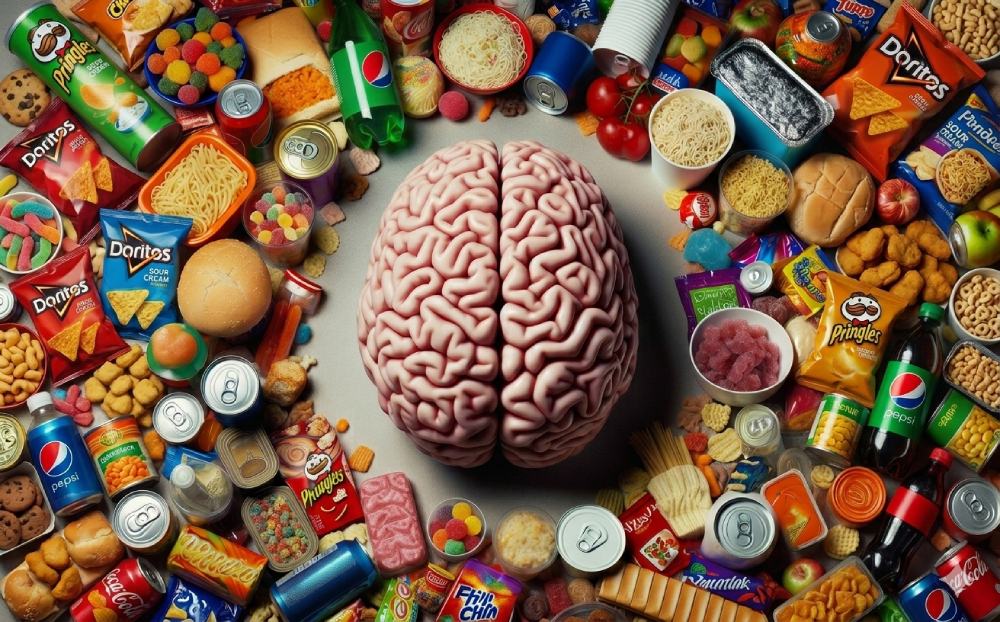
We all know that some foods are healthy while others are less so or not at all. Foods like vegetables, fruits, fish, minimally processed lean meats, whole grains, and yogurt are generally considered healthy because they provide nutrients the body needs, such as healthy fats, carbohydrates, proteins, vitamins, and fiber. On the other hand, foods […]

Understanding Adolescence as a Critical Developmental Period; Adolescence is the period of development between childhood and adulthood, roughly from ages 10 to 19, or even 24 (Sawyer et al., 2018). Puberty is a period of rapid growth and physical development during which a child transforms into an adult. Adolescence is also a period of intense […]
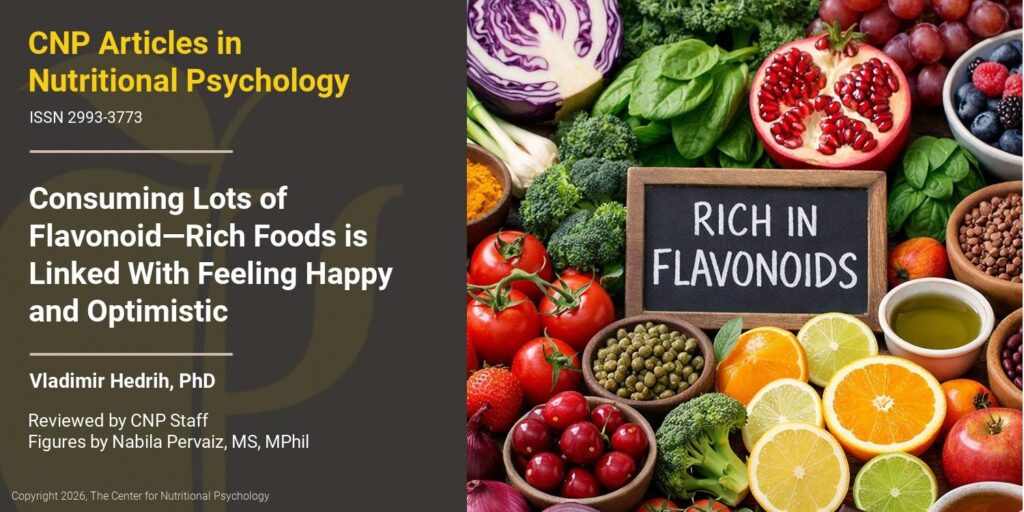
What is psychological well-being? Psychological well-being is an overarching concept in psychological research that encompasses feelings of happiness, life satisfaction, a sense of purpose, and optimism. People experiencing sustained psychological well-being tend to be happy, optimistic, satisfied with their lives, and see their lives as meaningful (Trudel-Fitzgerald, Millstein, et al., 2019). While it might seem […]
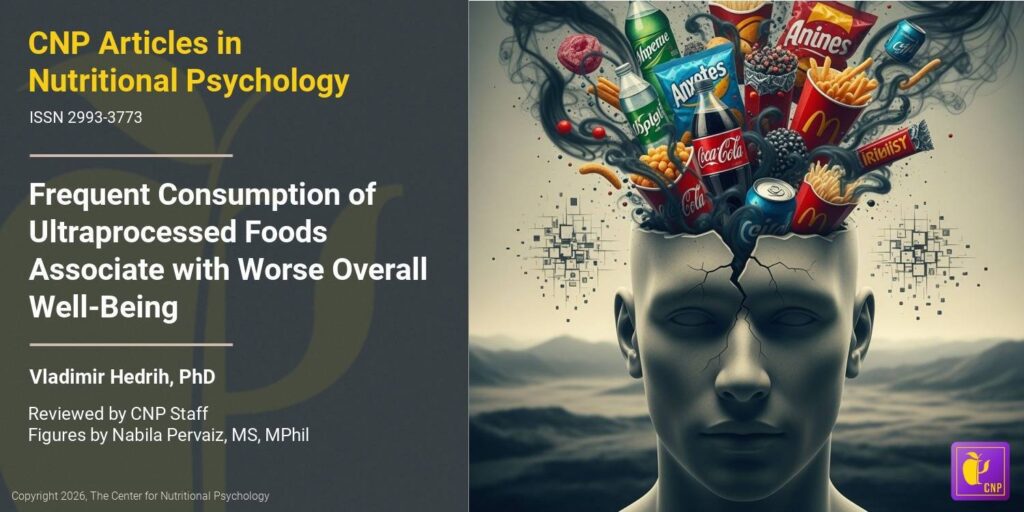
An analysis of Global Mind Project data spanning 60 countries, published in Frontiers in Nutrition, found that frequent consumption of ultra-processed foods is associated with worse overall mental well-being. Major contributors to this link were increased symptoms of depression and challenges with emotional and cognitive control. The burden of mental distress linked to ultra-processed food […]
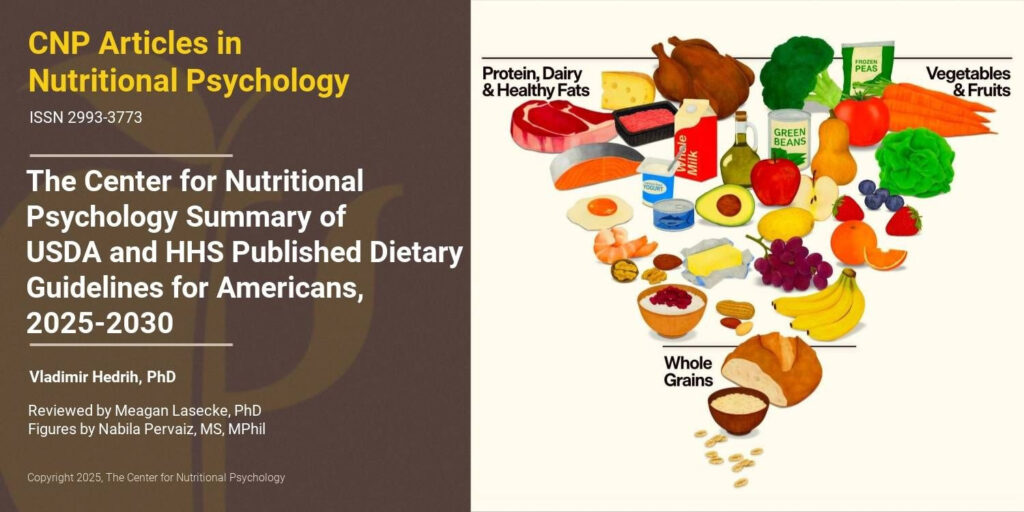
Editor’s Note: This CNP summary presents the newly released Dietary Guidelines for Americans 2025–2030, exactly as published, without additional commentary. The CNP team is currently conducting an internal review to assess these guidelines and their implications for nutritional psychology. Overview of the USDA & HHS Dietary Guidelines for Americans (2025–2030) The U.S. Department of Agriculture […]
A multicenter observational study in Japan published in the Frontiers in Clinical Diabetes and Healthcare found that individuals with type 2 diabetes taking glucagon-like peptide-1 receptor agonists (GLP-1RAs) showed reduced external eating scores after 12 months of therapy Their blood sugar levels, body weight, and body fat percentage also decreased significantly Emotional and restrained eating […]
