 Navigation


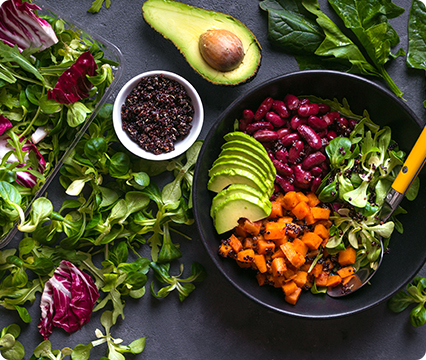
Plant-based diets especially healthy ones are negatively associated with depression: A cross-sectional study
This research article explores the potential of diet as a modifiable factor in the prevention of depression, focusing on the associations between an overall plant-based diet index (PDI), a healthful PDI (hPDI), and an unhealthful PDI (uPDI) with the prevalence of depression. The study hypothesized that adherence to a plant-based diet, particularly the hPDI, would correlate with lower depression rates, while the uPDI would be linked to increased depression.
Utilizing data from the US National Health and Nutrition Examination Survey spanning 2005 to 2018, the researchers conducted a cross-sectional analysis involving 31,622 participants aged 20 years or older. Diet was assessed via 24-hour recalls, and depression was measured using the Patient Health Questionnaire-9 (PHQ-9). Logistic regression and linear regression analyses were employed to calculate odds ratios (ORs) and percentage changes (%), respectively.
The findings revealed that the age-standardized prevalence of major depression (PHQ-9 score ≥ 10) was 8.8% (n = 2,744). The overall PDI showed no significant association with the odds of depression (OR comparing extreme quintiles 0.84, 95% CI: 0.66–1.07; ptrend = 0.168), although it was linked to lower PHQ-9 scores (β = -0.07, 95% CI: -0.13, -0.02, ptrend = 0.045). In contrast, higher hPDI scores were associated with lower odds of depression (OR = 0.69, 95% CI: 0.55, 0.87, ptrend = 0.007) and decreased PHQ-9 scores (β = -0.07, 95% CI: -0.14, 0.00, ptrend = 0.013). Conversely, higher uPDI scores correlated positively with depression prevalence (OR = 1.78, 95% CI: 1.44–2.20, ptrend < 0.001) and increased PHQ-9 scores (β = 0.19, 95% CI: 0.14, 0.24, ptrend < 0.001).
In conclusion, the study suggests that plant-based diets, particularly those enriched with healthier plant foods, may serve as a beneficial strategy for the primary prevention of depression. Conversely, diets emphasizing less healthy plant foods are associated with elevated depression levels among US adults. [NPID: plant-based diet, plant foods, depression]
Year: 2025