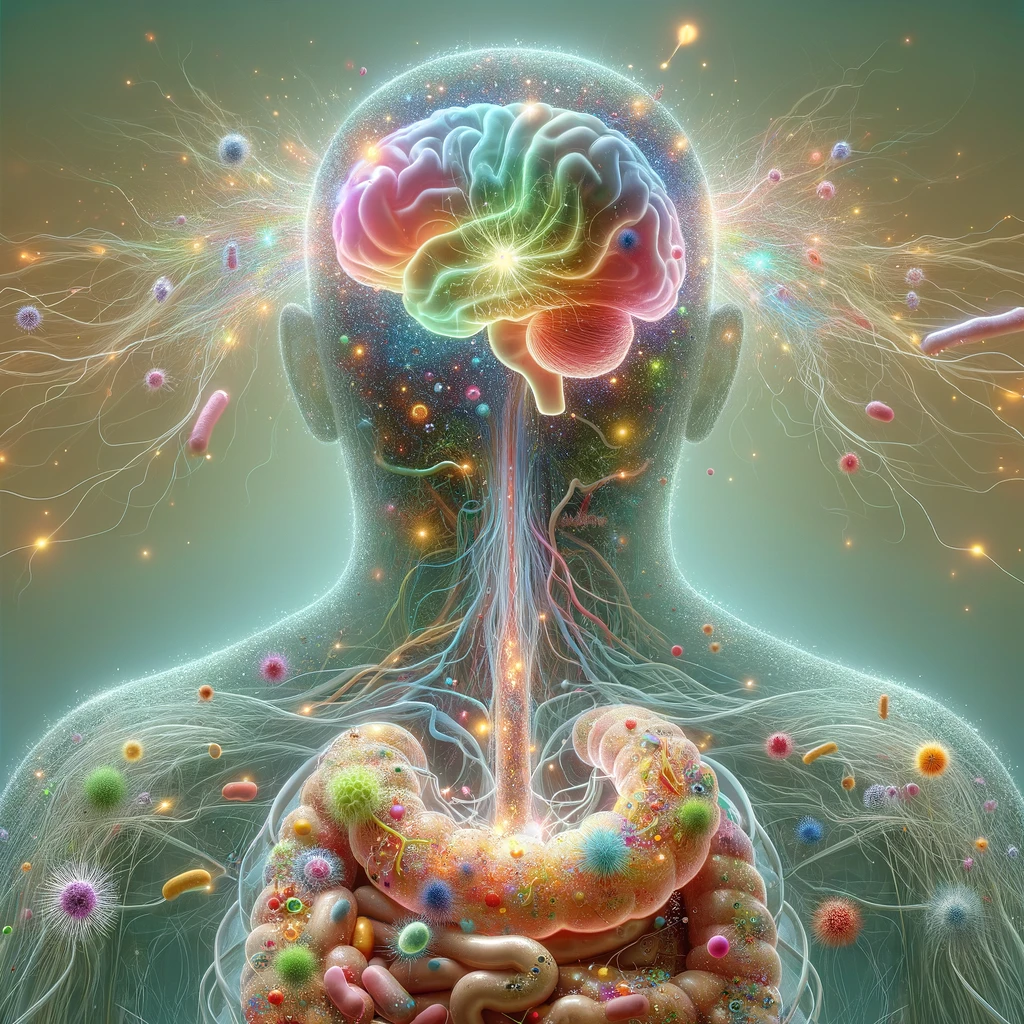
The CNP Microbiota-Gut-Brain Axis(MGBA) & Mental HealthResearch Category consolidates research exploring the interconnected relationship between dietary intake, the microbiome, and the gut-brain axis in the adult population. To view each original study on the open internet, click “Original.” To view the CNP-written abstract summary, click “CNP Summary.” While only some of the CNP-written abstract summaries are available below for free, all abstract summaries are available to CNP members through the CNP Library Membership.
Mind-altering with the gut: Modulation of the gut-brain axis with probiotics
This 2018 review explored the role of gut microbiota in bidirectional interactions between the gut and the brain, including neural, immune-mediated, and metabolic mechanisms. Recent preclinical and clinical trials revealed that gut microbiota plays an important role in the bidirectional interactions between the gastrointestinal tract, the enteric nervous system, and the central nervous system, which is alarming since alterations in gut microbiota composition may be associated with pathogenesis of various neurological disorders, including stress, autism, depression, Parkinson’s disease, and Alzheimer’s disease. Kim et al. (2018) also highlighted recent advances in the understanding of probiotic modulation of neurological and neuropsychiatric disorders. [NPID: psychiatric illnesses, MGBA, gut-brain axis, gut microbiome, enteric nervous system, neurological disorders, stress, autism, depression, Parkinson’s disease, Alzheimer’s disease]
While many have long believed that studying the brain would confirm the neurobiological mechanisms involved in anxiety- and trauma-related disorders, this 2018 article argues that the microbial community that lives in the gut (microbiota) and its interactions may deserve more attention when investigating brain disorders and developing novel treatments and diagnostics. In animal studies, the […]
Metabolomics offers a thorough method for assessing the pathophysiology of complex disorders like depression since it reflects the whole impact of genetic and environmental factors. Amin et al. (2023) conducted this study to analyze the interaction between the human gut microbiota and metabolome in the development of major depressive disorder (MDD), determine the metabolic fingerprints […]
We use cookies to ensure that we give you the best experience on our website. If you continue to use this site we will assume that you are happy with it.
 Navigation