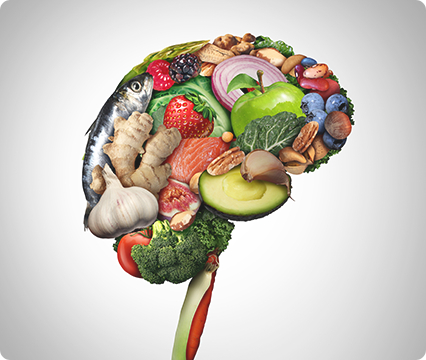
The CNP Diet, Depression, and AnxietyResearch Category consolidates research exploring the interconnected relationship between dietary intake, depression, and anxiety. To view each original study on the open internet, click “Original.” To view the CNP-written abstract summary, click “CNP Summary.” While only some of the CNP-written abstract summaries are available below for free, all abstract summaries are available to CNP members through the CNP Library Membership.
Fermented foods, neuroticism, and social anxiety: An interaction model
Hilimire, DeVylder, and Forestell (2015) hypothesized that fermented foods likely to contain probiotics may relate to neuroticism and social anxiety symptoms, given the established evidence for probiotics possessing an anxiolytic influence. Fermented foods intake, neuroticism and social anxiety were self-reported by 710 young adults in this experiment. An interaction model revealed that neuroticism, exercise frequency, and fermented food consumption significantly and independently predicted social anxiety. Importantly, more frequent consumption of fermented foods in those high in neuroticism resulted in fewer symptoms of social anxiety. This study suggests that fermented food products likely to contain probiotics may be a useful and cost-efficient way to prevent/manage anxiety symptoms especially in individuals with neuroticism tendencies. [NPID: fermented food, probiotics, neuroticism, social anxiety, probiotics, exercise, anxiety]
Previous research has hinted at a potential link between biomarkers tied to lipid, apolipoprotein, and carbohydrate metabolism and the susceptibility to depression, anxiety, and stress-related conditions, albeit with inconsistent findings. To explore this further, Chourpiliadis et al. (2024) undertook a population-based cohort investigation utilizing data spanning from 1985 to 1996 (during occupational health screenings). Blood […]
Major depressive disorder is a prevalent condition that significantly impairs social functioning, worsens disease outcomes, and reduces quality of life. Although its precise function is yet unknown, a high-salt diet (HSD) has been closely associated with the development and course of depression. This study by Lu et al. (2025) found that High-salt diet (HSD) triggers […]
We use cookies to ensure that we give you the best experience on our website. If you continue to use this site we will assume that you are happy with it.