Cognitive function and consumption of fruit and vegetable polyphenols in a young population: is there a relationship?
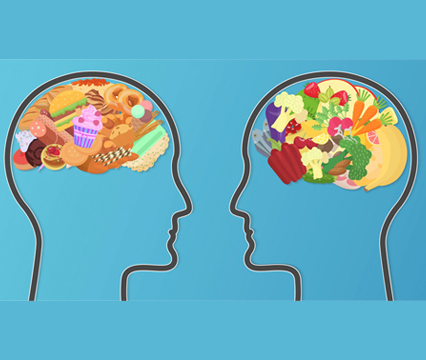
The link between polyphenols in fruits and vegetables and cognitive function in young people was explored in this review. Carrillo et al (2019) focused particularly on memory (immediate and working) and attention (sustained and selective). The mechanism in which polyphenols exert their positive cognitive effect is discussed in this paper. Neuronal plasticity is increased in the hippocampus part of the brain and thus pathways of signaling and transcription factors (ERK/Akt) are modulated. Also, blood flow to the cerebrum is enhanced, as well as levels of nitric oxide and oxygenation in the blood. [NPID: cognition, fruits, vegetables, FV intake, cognitive function, young people, memory, working memory, immediate memory, attention, sustained attention, selective attention, polyphenols, neuronal plasticity, hippocampus, cerebrum, nitric oxide, oxygenation]
Year: 2019
Reference: Carrillo, J. Á., Zafrilla, M. P., & Marhuenda, J. (2019). Cognitive Function and Consumption of Fruit and Vegetable Polyphenols in a Young Population: Is There a Relationship?. Foods (Basel, Switzerland), 8(10), 507. https://doi.org/10.3390/foods8100507
Related Studies
This 2019 study investigated the impact of consuming eggs on cognitive performance, glycemic response, and appetite in children. The authors wanted to address the limited data available on the effects of protein and fat on cognitive performance in children. In this randomized trial, 19 children were either given whole eggs, egg whites, egg yolks, or […]
Zhang et al. (2022) conducted their study to investigate the impact of consuming sugar-sweetened beverages (SSB) on executive function (EF). To do so, a sample of 1427 adolescents underwent an evaluation of their EF (N-back shift task, more-odd shifting task, and modified Eriksen flanker task) identifying three core EF domains of interest (working memory, inhibition, […]
 Navigation