 Navigation



Consuming lots of flavonoid—rich foods and beverages is associated with a slightly higher likelihood of being happy and optimistic
Vladimir Hedrih, PhD
Lead Researcher & Editorial Director Listen to this Article
Abstract
This article provides a comprehensive summary and psychological appraisal of the newly released Dietary Guidelines for Americans 2025–2030. Released on January 7, 2026, these guidelines represent a significant shift in U.S. nutrition policy, moving away from nutrient-isolated advice toward a “real food” framework. Key updates include a prioritized focus on whole, nutrient-dense foods—specifically protein, full-fat dairy, and fiber-rich grains—and a strong recommendation to reduce highly processed foods containing refined carbohydrates and added sugars. This review examines these guidelines through the lens of nutritional psychology, exploring the potential impact of these shifts on chronic disease prevalence, metabolic health, and the microbiota-gut-brain axis.
Listen to this Article
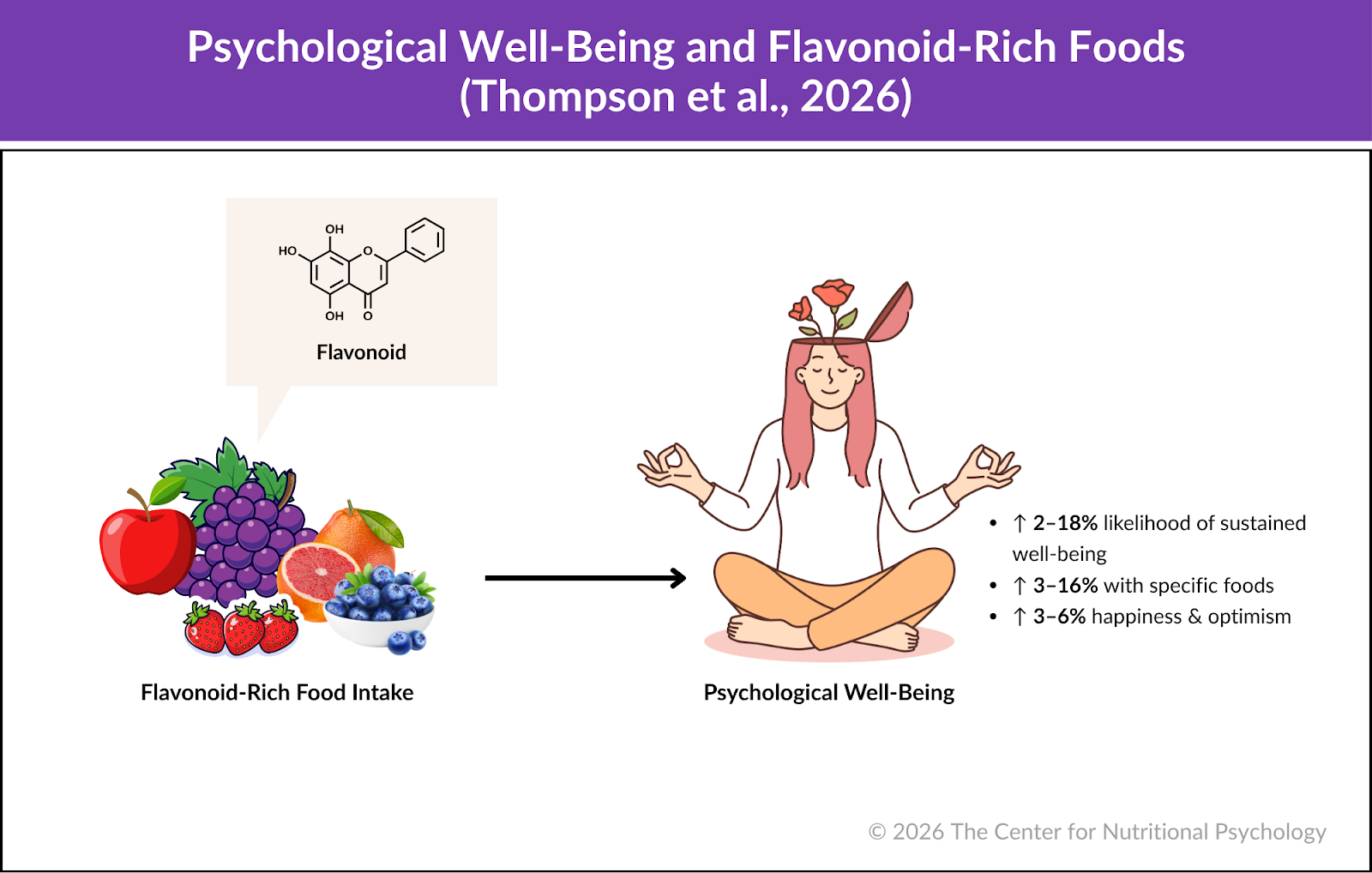
An analysis of Nurses’ Health Study data published in Clinical Nutrition found that nurses who consume more flavonoid-rich foods and beverages have a slightly higher likelihood (3–6% higher) of being sustainably happy and optimistic. Consumption of specific types of flavonoid-rich foods (strawberries, apples, oranges, grapefruit, blueberries) was associated with a 3–16% greater likelihood of sustained psychological well-being (Thompson et al., 2026).
Psychological well-being
Psychological well-being is an overarching concept in psychological research that encompasses feelings of happiness, life satisfaction, a sense of purpose, and optimism. People experiencing sustained psychological well-being tend to be happy, optimistic, satisfied with their lives, and see their lives as meaningful (Trudel-Fitzgerald, Millstein, et al., 2019).
While it might seem intuitive that feeling happy, optimistic, and finding life meaningful might contribute to one’s health, studies indicate that the influence might go both ways. Healthier behaviors may also lead to higher psychological well-being. For example, a large longitudinal study that followed participants for 10–22 years found that people who led healthier lifestyles tended to experience greater happiness and optimism in the future (Trudel-Fitzgerald, James, et al., 2019).
High psychological well-being has been associated with numerous health benefits, including lower risks of chronic disease and mortality, as well as greater healthspan,” Alysha S. Thompson and her colleagues explain.
Psychological well-being and diet
One important category of health-related behaviors scientists explore in relation to psychological well-being is dietary intake. It has long been known that if key nutrients are missing from one’s diet, health is greatly diminished.
But is psychological well-being also affected by more subtle differences in dietary patterns? It appears so. Previous studies have established that conditions like depression are more likely in individuals consuming high amounts of added sugar (Zhang et al., 2024), and that junk food consumption is associated with worse mental health (Ejtahed et al., 2024). On the other hand, people adhering to healthy diets tend to have better mental health, mood, and quality of life (Camprodon-Boadas et al., 2024; Timlin et al., 2025).
Previous studies have already established that health conditions like depression are more likely in individuals consuming lots of foods with added sugar (Zhang et al., 2024).
Dietary flavonoids and psychological well-being
In a study conducted by Alysha S. Thompson from Queen’s University Belfast and her colleagues, results showed that nurses who eat three or more servings of flavonoid-rich foods per day tend to have better sustained psychological well-being. Over a period of up to 18 years, higher flavonoid intake was associated with higher initial levels of psychological well-being (Thompson et al., 2026).
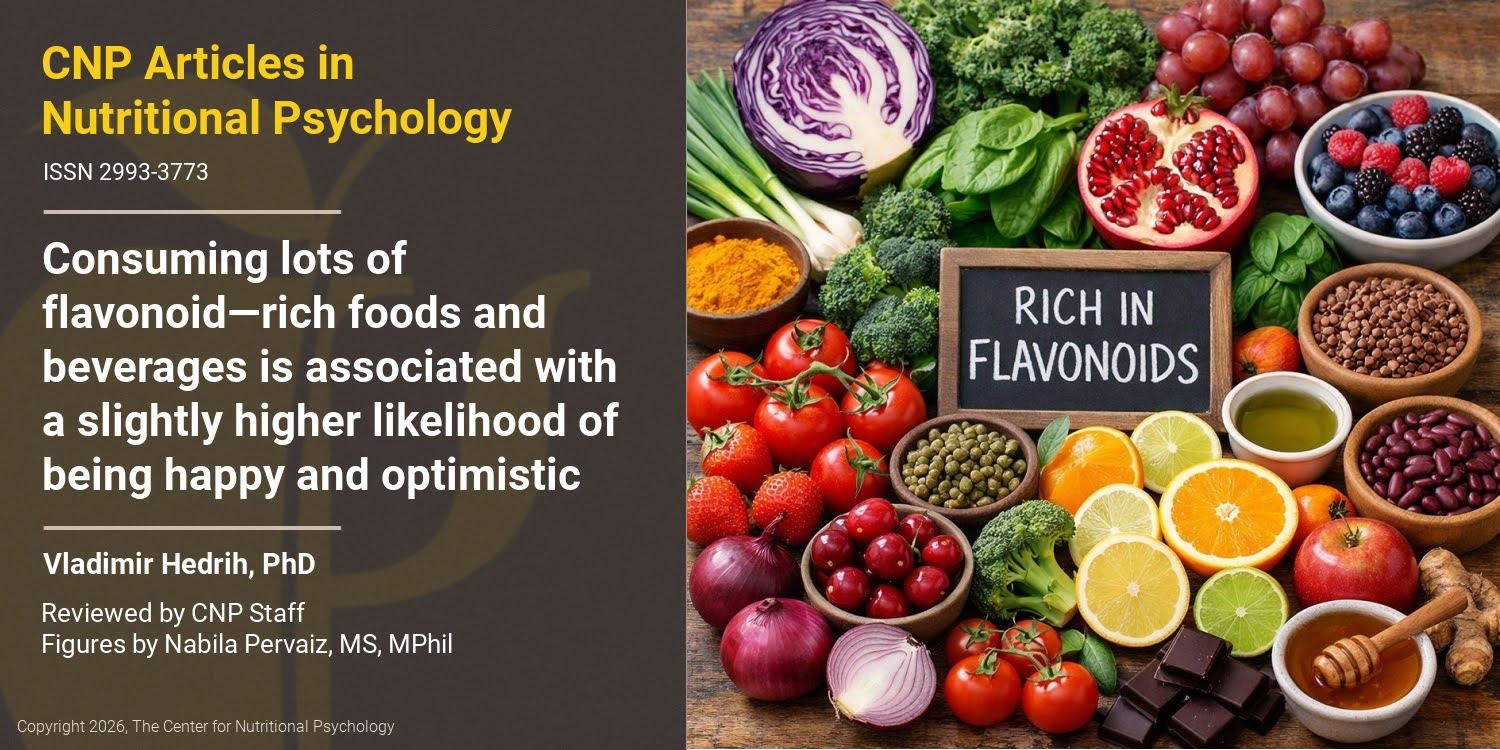
Flavonoids are a group of naturally occurring plant compounds (polyphenols) known for their antioxidant and anti-inflammatory properties. They are found in a wide variety of plant-based foods, including berries, apples, citrus fruits, onions, leafy greens, tea, dark chocolate, legumes, and whole grains.
Photo courtesy of Shutterstock
The analyses used data from the Nurses’ Health Study, a longitudinal study that began in 1976 with 121,700 female registered nurses aged 30–55. Participants’ lifestyle factors, medical history, and health conditions were tracked through biennial questionnaires. This analysis used data from 1990–2012, examining flavonoid intake in relation to sustained happiness and optimism over multiple follow-up periods.
Psychological well-being is higher among nurses eating specific flavonoid-rich foods
The analyses found that higher flavonoid intake scores were associated with a 3–6% higher likelihood of sustained happiness and optimism. Specific foods such as strawberries, apples, oranges, grapefruit, and blueberries were linked to a 3–16% greater likelihood of sustained psychological well-being. Total flavonoid intake was associated with a 2–18% increase.
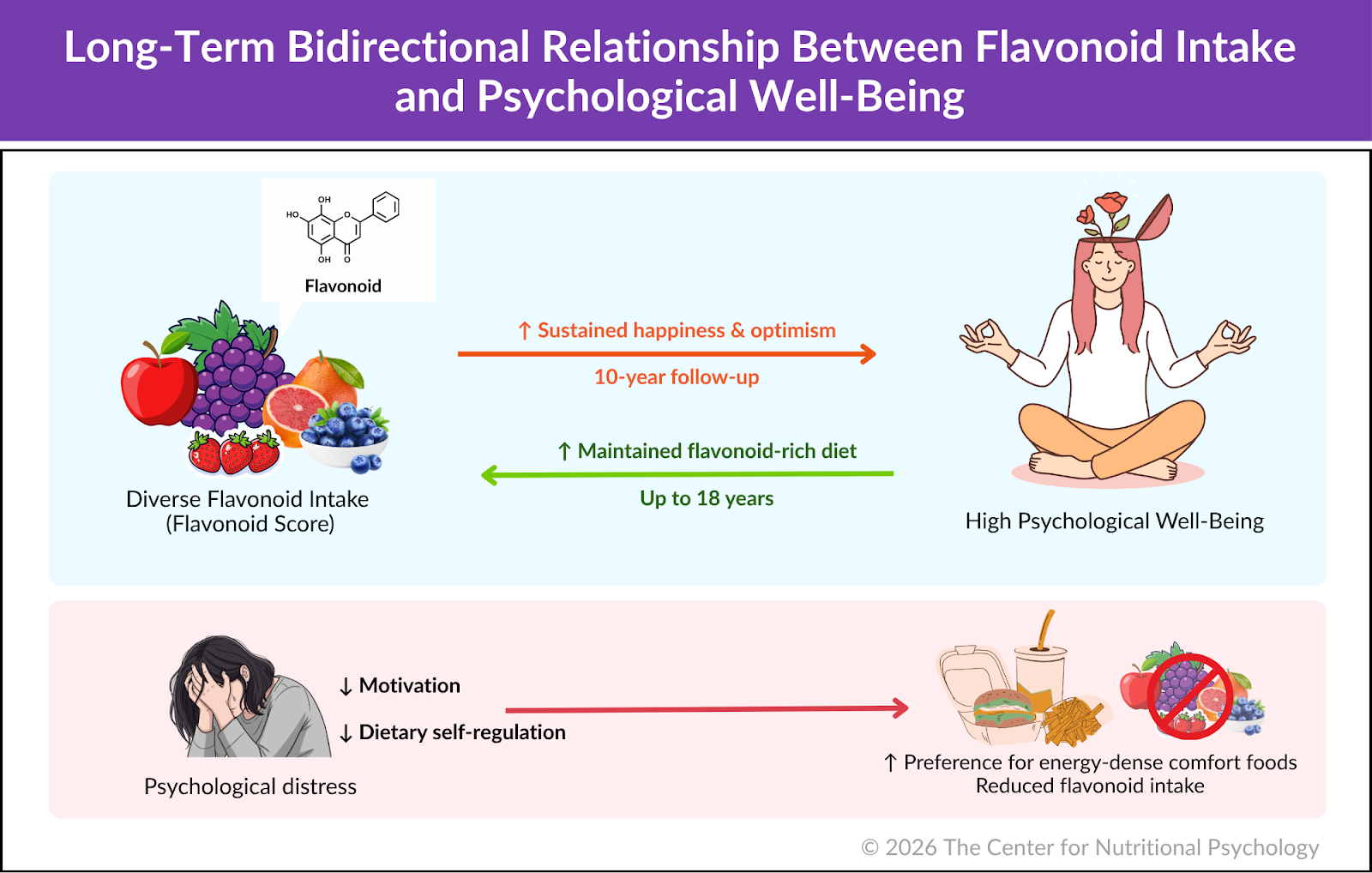
Interestingly, the association between flavonoid intake and optimism was somewhat stronger among women who were overweight or obese. The relationship also worked in the opposite direction: individuals with higher baseline happiness or optimism were more likely to maintain higher flavonoid intake over time.
Thompson and colleagues state,
“Our data suggest that a higher flavonoid score… is associated with a higher likelihood of sustaining high levels of happiness and optimism over a 10-year follow-up period.”
The associations were primarily driven by flavonoid-rich fruits such as strawberries, apples, oranges, grapefruit, and blueberries.
The authors also note that psychological distress may reduce flavonoid intake by lowering motivation, increasing preference for comfort foods, and impairing dietary self-regulation.
The associations are there, but very weak
While associations between flavonoid intake and psychological well-being were observed, they were very weak and only detectable due to the large sample size. This limits their practical significance. Additionally, all participants were female health professionals, which may limit generalizability to the broader population.
The paper Dietary flavonoid intake and psychological well-being — A bidirectional relationship was authored by Alysha S. Thompson and colleagues.
To learn more about the connection between nutrition and psychological well-being, enroll in NP 110: Introduction to Nutritional Psychology Methods
and explore the Diet, Mood & Well-Being research category
.
References
Camprodon-Boadas, P., Gil-Dominguez, A., De La Serna, E., Sugranyes, G., Lázaro, I., & Baeza, I. (2024). Mediterranean Diet and Mental Health in Children and Adolescents: A Systematic Review. Nutrition Reviews, nuae053. https://doi.org/10.1093/nutrit/nuae053
Ejtahed, H.-S., Mardi, P., Hejrani, B., Mahdavi, F. S., Ghoreshi, B., Gohari, K., Heidari-Beni, M., & Qorbani, M. (2024). Association between junk food consumption and mental health problems in adults: A systematic review and meta-analysis. BMC Psychiatry, 24(1), 438. https://doi.org/10.1186/s12888-024-05889-8
Thompson, A. S., Bondonno, N. P., Liu, Y. L., Qureshi, F., Kubzansky, L. D., Trudel-Fitzgerald, C., Boehm, J. K., Rimm, E. B., & Cassidy, A. (2026). Dietary flavonoid intake and psychological well-being – A bidirectional relationship. Clinical Nutrition, 58. https://doi.org/10.1016/j.clnu.2026.106579
Timlin, D., McCormack, J. M., Kerr, M., Keaver, L., & Simpson, E. E. A. (2025). The MIND diet, cognitive function, and well-being among healthy adults at midlife: A randomised feasibility trial. BMC Nutrition, 11(1), 59. https://doi.org/10.1186/s40795-025-01020-6
Trudel-Fitzgerald, C., James, P., Kim, E. S., Zevon, E. S., Grodstein, F., & Kubzansky, L. D. (2019). Prospective associations of happiness and optimism with lifestyle over up to two decades. Preventive Medicine, 126, 105754. https://doi.org/10.1016/j.ypmed.2019.105754
Trudel-Fitzgerald, C., Millstein, R. A., von Hippel, C., Howe, C. J., Tomasso, L. P., Wagner, G. R., & VanderWeele, T. J. (2019). Psychological well-being as part of the public health debate? Insight into dimensions, interventions, and policy. BMC Public Health, 19(1), 1712. https://doi.org/10.1186/s12889-019-8029-x
Zhang, L., Sun, H., Liu, Z., Yang, J., & Liu, Y. (2024). Association between dietary sugar intake and depression in US adults: A cross-sectional study using data from the National Health and Nutrition Examination Survey 2011–2018. BMC Psychiatry, 24(110), 1–10. https://doi.org/10.1186/s12888-024-05531-7

Share This Article
Seamless sharing for a connected world.
