Can You Really Be Addicted to Food? Here’s What Research Says
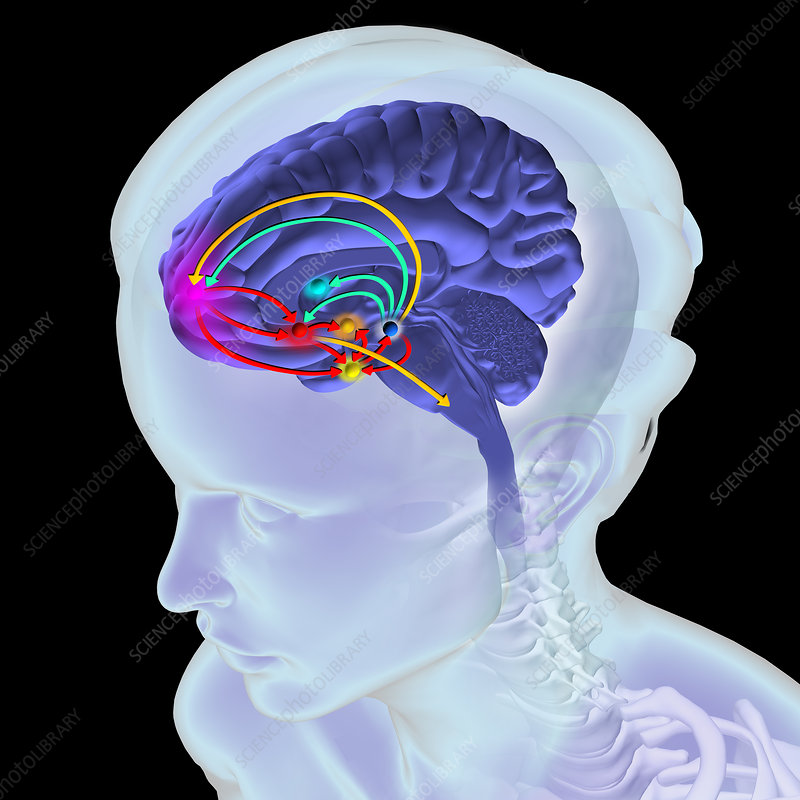
Illustration of the reward pathway in the human brain. This pathway is initiated when a pleasurable stimulus, such as food, sex or drugs, is experienced. The stimulus (upper orange arrow) triggers the release of dopamine (blue arrows) by the ventral tegmental area (VTA, dark blue sphere). The dopamine travels to a number of different areas of the brain that then in turn release dopamine (red arrows). These areas include the nucleus accumbens (red sphere), which initiates motor outputs (lower orange arrow) to sustain the pleasurable stimulus, the prefrontal cortex (pink), which shifts focus and planning towards the pleasurable stimulus, and the amygdala, which is involved in conditioned learning and emotions. The hypothalamus (orange sphere) is involved in coordinating the response by secreting hormones that control bodily functions. The reward pathway plays a central role in addiction. The septum is light blue.
We use cookies to ensure that we give you the best experience on our website. If you continue to use this site we will assume that you are happy with it.




 Navigation


