Navigation


Communicative and critical health literacy and eating behaviors in Japanese adults predominantly over 40: The modifying role of body image distortion
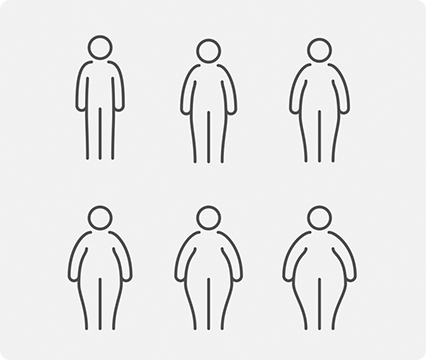
This study investigates the interplay between health literacy (HL) and body image distortion (BID) in influencing disordered eating behaviors among Japanese adults. Disordered eating behaviors, such as emotional eating (EE), uncontrolled eating (UE), and cognitive restraint (CR), pose significant public health challenges in Japan. BID, characterized by the misperception of one’s body size, correlates with both underweight and overweight conditions. Using a cross-sectional design, the study administered the 14-item Health Literacy Scale for HL and the Figure Rating Scale for BID, which was categorized into underestimation, non-distortion, and overestimation based on BMI. Eating behaviors were evaluated using the 18-item Three-Factor Eating Questionnaire-R18V2. Multinomial logistic regression analyzed the association between HL and BID, while general linear models tested the moderating effects of BID on higher-order HL domains.
The results indicated that among participants, 13.0% were underweight, 60.2% were normal weight, 18.7% were overweight, and 8.0% were obese, with BID classified as overestimation (36.7%), non-distortion (53.6%), and underestimation (9.7%). Notably, HL scores showed no significant association with BID overestimation or underestimation; however, higher BMI was inversely associated with overestimation. Higher functional HL correlated with reduced EE, UE, and CR across all BID subgroups. In contrast, the relationship between communicative HL and eating behaviors varied by BID category, being positively associated with EE and CR in the underestimated group but inversely associated with EE in the overestimated group. Critical HL was positively associated with CR in the overestimation group.
The findings suggest that enhancing functional HL may promote healthier eating behaviors irrespective of BID. Communicative HL may benefit individuals with overestimated BID but could be detrimental for those with underestimation, while critical HL appears to facilitate restrictive eating behaviors among individuals with overestimated BID. [NPID: Health literacy, body image distortion, cognitive restraints, uncontrolled eating, emotional eating]
Year: 2025