 Navigation


Association between food addiction and body image dissatisfaction in bariatric surgery candidates: A cross-sectional study
The pursuit of highly palatable foods as a reward can lead to dysfunctional eating behaviors. In bariatric surgery candidates, symptoms of food addiction may impact postoperative weight loss, increase the risk of developing psychological and behavioral disorders, and influence body image perception. This study aimed to determine the association between food addiction and body image dissatisfaction in bariatric surgery candidates.
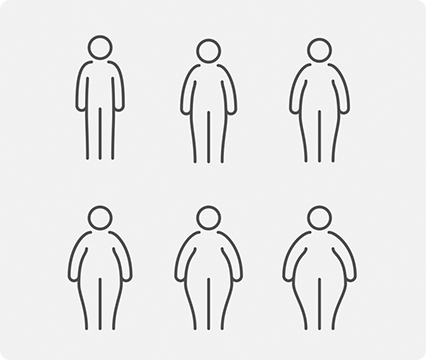
A cross-sectional study was conducted at the Multidisciplinary Outpatient Clinic for Surgical Obesity at Hospital de Clínicas of the Federal University of Paraná, Curitiba, Brazil, involving 124 participants. The Modified Yale Food Addiction Scale 2.0 (mYFAS 2.0) assessed food addiction symptoms, while the Body Shape Questionnaire (BSQ) evaluated body dissatisfaction. Anthropometric measurements included weight and height to calculate Body Mass Index (BMI). Associations between categorical variables were analyzed using the chi-square test or Fisher’s exact test, and the Mann-Whitney test compared numerical variables between groups. The relationship between food addiction and body dissatisfaction was assessed using binary logistic regression, adjusted for covariates, with model fit verified by the Hosmer-Lemeshow test and the absence of multicollinearity confirmed by variance inflation factor (VIF) values (<2).
Of the participants, 80% were female (n = 102), with a mean age of 40 ± 13 years and a BMI of 46 ± 7 kg/m². Notably, 69% (n = 86) exhibited body dissatisfaction, and 21% (n = 26) displayed food addiction symptoms. Individuals with moderate/severe body dissatisfaction had significantly higher odds of exhibiting food addiction symptoms compared to those with no/low dissatisfaction, after controlling for age, BMI, sex, and race/ethnicity. The findings suggest that lower levels of body dissatisfaction correlate with a decreased likelihood of food addiction symptoms. This underscores the necessity for an integrated approach in the treatment of bariatric surgery candidates, addressing psychological and behavioral aspects to promote long-term success. [NPID: Highly palatable, body image, food addiction, bariatric]
Year: 2025